Notes Against the Machine: Film Composers Draw the Line on AI-Generated Scores
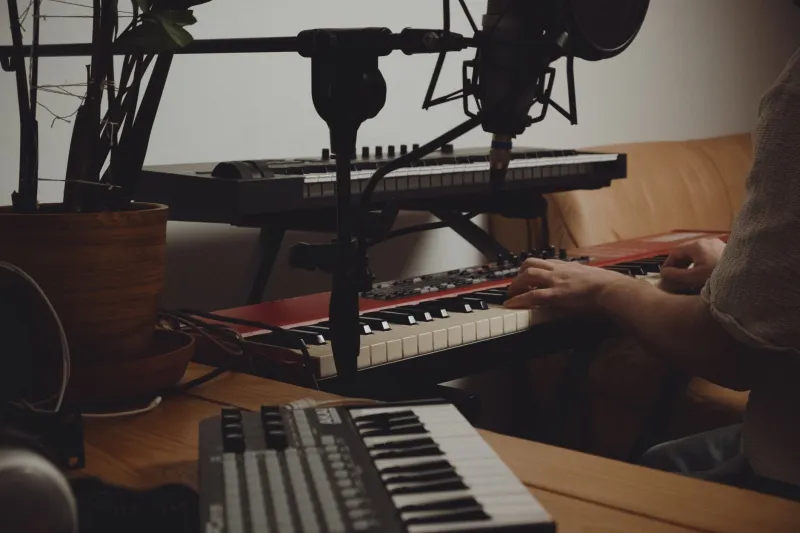
For decades, the film score has functioned as the invisible architecture of cinema — the emotional scaffolding that tells audiences how to feel before a single word of dialogue is spoken. Bernard Herrmann's shrieking strings in Psycho, Ennio Morricone's haunting whistles across sun-scorched westerns, Hans Zimmer's percussive dread beneath Christopher Nolan's blockbusters: these are not decorative flourishes. They are the grammar of the medium itself. Yet today, that grammar is under negotiation — not in a composer's studio, but in a boardroom spreadsheet.
Across Hollywood and the broader American entertainment industry, a quiet but consequential battle is unfolding over who — or what — will score the films and television series of the coming decade. Artificial intelligence platforms capable of generating functional, contextually responsive music in a matter of minutes have moved from novelty to genuine operational tool. And as studios face mounting financial pressure to reduce below-the-line costs, the temptation to replace a $150,000 composer contract with a software subscription is proving difficult to resist.
Composers are not taking this lying down.
The Economics Behind the Disruption
To understand the conflict, it helps to understand the financial architecture of a modern film score. A mid-budget studio feature might allocate between $75,000 and $500,000 for original music, a figure that covers not only the composer's creative fee but also orchestration, live recording sessions, licensing clearances, and supervision. For streaming productions operating under compressed budgets, those numbers can feel prohibitive — particularly when AI platforms like Suno, Udio, and proprietary studio tools promise serviceable results at a fraction of the cost.
The appeal is not purely monetary. AI-generated music is fast, infinitely revisable, and requires no negotiation over creative vision. A director can input a scene's emotional tone, tempo, and instrumentation preferences and receive a workable draft within minutes. For productions under deadline pressure, that efficiency is genuinely seductive.
But composers and their advocates argue that efficiency is not the same as artistry — and that the distinction matters enormously to the final product.
Organizing in the Face of Displacement
The Society of Composers and Lyricists, the primary professional organization representing film and television composers in the United States, has been vocal in its opposition to uncredited and uncompensated AI music deployment. The organization has called for clearer contractual language defining when and how AI tools may be used in productions where human composers are under contract, and has lobbied for disclosure requirements that would inform audiences — and award bodies — when a score has been generated by algorithm rather than human creative labor.
Beyond institutional advocacy, individual composers have begun pursuing more direct forms of resistance. Some have inserted explicit AI-exclusion clauses into their contracts, prohibiting studios from replacing any portion of their work with machine-generated alternatives without renegotiation. Others have formed informal collectives designed to offer studios a compelling counterargument: that a human composer, properly resourced, can deliver both speed and depth in ways no current AI platform can replicate.
One such collective, operating out of Los Angeles, has developed a tiered service model that compresses traditional scoring timelines without sacrificing live performance. By pre-negotiating session musician rates, maintaining standing relationships with recording facilities, and integrating digital production tools into their workflow, the group argues it can compete directly on cost while delivering the textural richness and emotional specificity that separates a memorable score from functional background noise.
The Artistic Argument
The case against AI-generated film music is not merely economic — it is fundamentally philosophical. Film scoring is, at its core, an act of interpretation. A composer reads a script, watches a rough cut, and makes thousands of micro-decisions about where silence should live, where melody should swell, and where dissonance should unsettle. Those decisions are informed by cultural context, personal history, and an intuitive understanding of human emotional experience that no training dataset, however vast, fully captures.
Consider the challenge of scoring grief. A human composer understands grief not as an abstract emotional category but as a lived, embodied experience — the way it arrives in waves, the way it coexists with unexpected humor, the way it changes shape across different cultural contexts. An AI system trained on thousands of film scores can identify the musical patterns associated with grief and reproduce them competently. What it cannot do, composers argue, is bring genuine understanding to the task.
This distinction may seem abstract until you consider its cumulative effect on audience experience. Scores that feel generic, however technically proficient, contribute to the broader sense of homogeneity that critics and audiences increasingly identify in studio content. The irony is acute: in attempting to reduce costs, studios may be inadvertently accelerating the creative flatness that is already eroding viewer engagement.
Alternative Pathways and the Independent Sector
Perhaps the most interesting development in this conflict is the degree to which it is driving innovation within the independent film sector. Composers who find the studio system increasingly hostile to their craft are turning toward independent productions, documentary work, and international co-productions as alternative venues for their talents. Several have also moved into the video game industry, where original scores remain highly valued and budgets for music have actually grown in recent years.
A number of emerging composers are also leveraging direct-to-audience platforms to build reputations outside traditional studio pipelines. By releasing original compositions on streaming platforms, scoring short films and festival projects, and cultivating audiences through social media and Patreon-style subscription models, these artists are constructing creative careers that do not depend on studio approval. It is a slower path, and a financially uncertain one, but it preserves the creative authority that many composers cite as their primary motivation.
What Studios Stand to Lose
The studios pursuing AI-generated music are, in most cases, making a rational short-term calculation. The cost savings are real. The turnaround times are faster. For productions where music functions primarily as atmospheric filler rather than narrative driver, the quality differential may be negligible.
But the long-term calculus is less favorable. The composers being pushed out of the studio ecosystem are not interchangeable inputs. They are relationships — between music and story, between artists and directors, between productions and the cultural memory of audiences who have grown up associating certain sonic signatures with certain emotional experiences. Once those relationships are severed at scale, rebuilding them will require more than a policy reversal. It will require trust, and trust, once broken, is not easily regenerated.
For a production company invested in stories that endure — stories that shape culture rather than merely reflect it — the soundtrack is never incidental. It is the emotional truth beneath the image, the feeling that lingers after the credits have rolled. Surrendering that to an algorithm is not merely a budget decision. It is a statement about what storytelling is ultimately for.